











Foreword
Eleven editions mapping the present and future of intangibles
There are reports that document what is happening. And there are reports that help make decisions about what is to come. Approaching the Future was created with that second ambition: not to limit itself to describing trends, but to offer those who lead organisations an in-depth, rigorous and actionable overview of intangible assets and resources so that they can anticipate, decide better and create value in a sustained way over time.
Today, eleven editions later , not only does that purpose remain but it is more necessary than ever. Because the environment in which organisations operate in 2026 is not simply complex; it is structurally unstable. The speed of technological change, the fragmentation of the geopolitical order, the erosion of trust and the pressure to attract and manage talent have ceased to be isolated phenomena and have become the everyday reality for those who manage companies. In this context, the excellent management of intangibles such as reputation, communication, leadership, purpose, brand, talent, sustainability or public affairs is absolutely necessary for all organisations . It is the infrastructure on which trust is built, the social licence to operate is sustained and business value is generated and protected in the short, medium and long term.


Ángel Alloza
CEO Corporate Excellence - Centre for Reputation Leadership

Clara Fontán
Chief Operating Officer & Intelligence Corporate
Excellence – Centre for Reputation Leadership and
Director of Approaching The Future

Isabel López Triana
Founding Partner and Managing Director
CANVAS Estrategias Sostenibles

Claudina Caramuti
Founding Partner and Development Director
CANVAS Estrategias Sostenibles
1. Introduction
1
Introduction
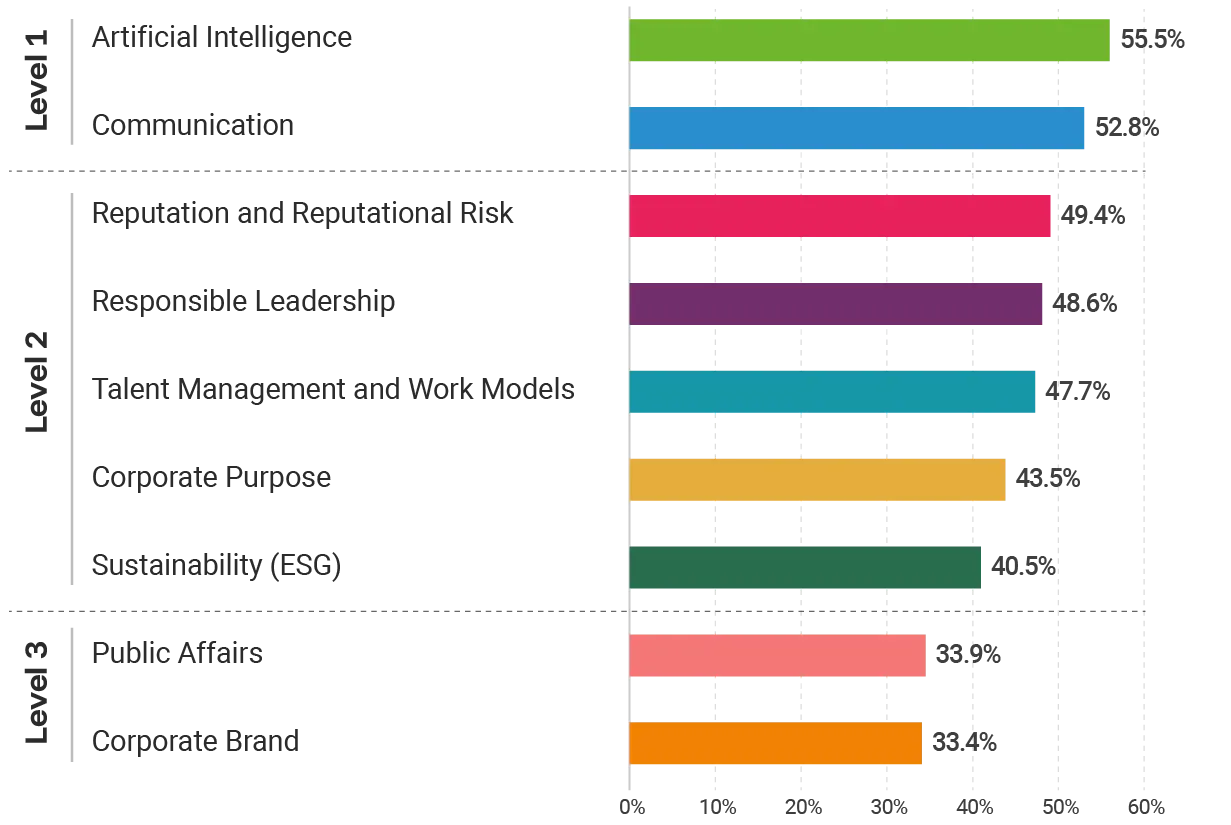
In its eleventh edition, Approaching the Future 2026 offers a broad and comparative overview of the state of intangible asset management in organisations. This year reflects one of the most significant shifts in the intangibles agenda: artificial intelligence has emerged as the leading priority for organisations by importance and ranks among the areas receiving the most resources and effort. It is presented not only as a technological tool, but also as an organisation-wide strategic capability that impacts organisations’ competitiveness, productivity, efficiency, decision-making, talent, communication and reputation. In addition, in this edition, talent management and work models gain centrality as a condition for activating this transformation, and public affairs are incorporated for the first time into the trend map, highlighting companies’ growing exposure to the institutional, regulatory and geopolitical environment.
1. introduction
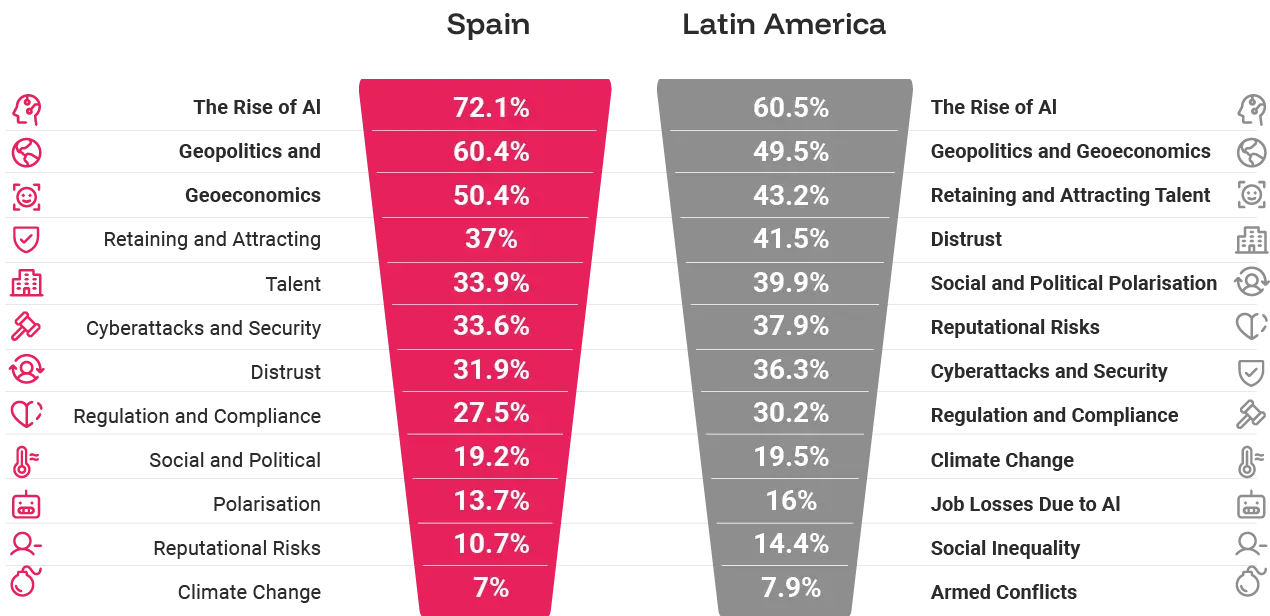
THE WORLD IN 2026: MAIN FORCES OF
CHANGE
Key factors shaping business management and the
management of intangibles
Source: Approaching the Future 2026
1. introduction
STRATEGIC
IMPLICATIONS

Artificial intelligence ceases to be an emerging trend and becomes an organisation- wide strategic capability for business performance
Geopolitics and geoeconomics cease to operate as external factors and become business variables
International tensions, regulatory changes, market fragmentation and economic uncertainty impact decision- making, supply chains, investment, risk management and the social licence to operate.
Its impact cuts across all dimensions of intangible management: reputation, communication, leadership, talent, sustainability, brand and public affairs.
However, its transformative capacity will not depend solely on technological investment, but on organisations’ ability to develop skills, adapt cultures, train teams and establish ethical and responsible frameworks for its use.
In contexts where institutional legitimacy is more fragile, organisations cannot limit themselves to managing their reputation reactively: they need to take a more active role in building social trust, coherence and legitimacy.
In Latin America, institutional distrust and polarisation reinforce the strategic role of reputation
2. TREND MAP
2
Trend
map
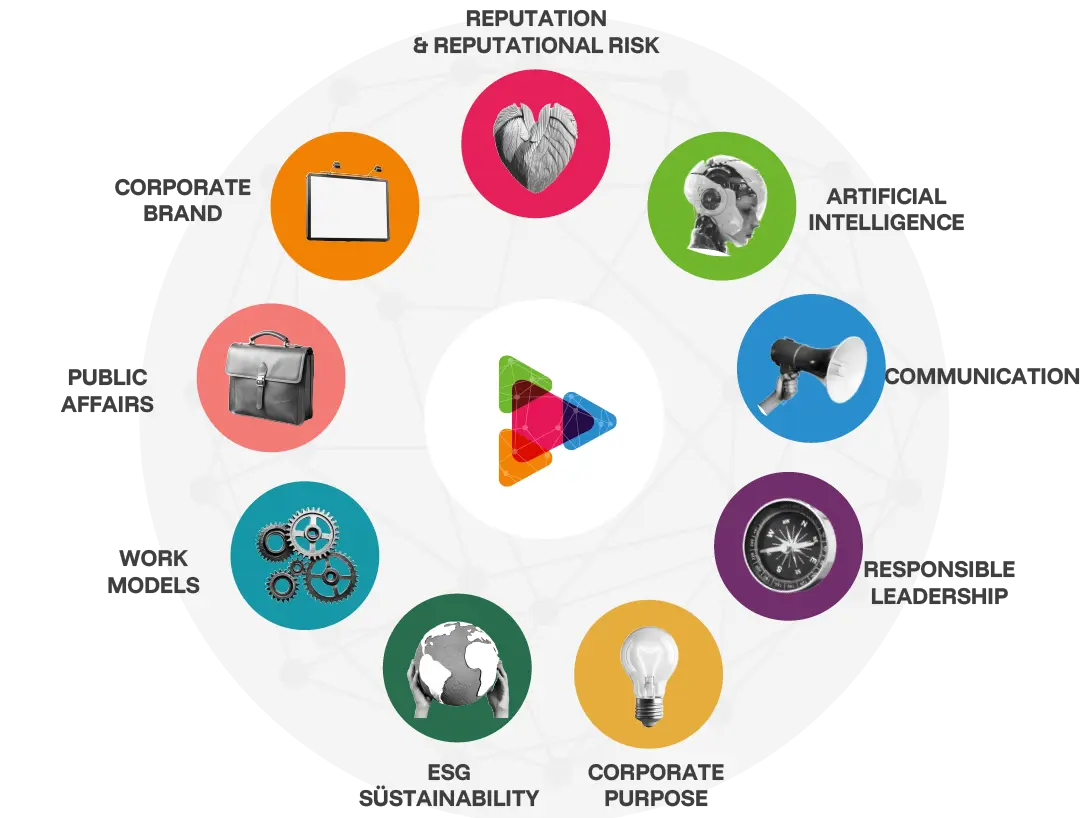
Approaching the Future 2026 presents nine major areas that shape the corporate agenda on reputation and intangibles .
The results show that the management of these assets is entering a phase of greater managerial demands: the priority is no longer only to recognise their value, but to turn them into organisational capabilities, indicators, management systems and decision-making criteria . Likewise, there is a deep interdependence between the different intangible assets. They should no longer operate as isolated areas: they influence each other and require management models capable of connecting decisions and resources.
2. TREND MAP
2026 Ranking BY IMPORTANCE
Importance Ranking 2026 - Ibero-America
Source: Approaching the Future 2026
2. TREND MAP
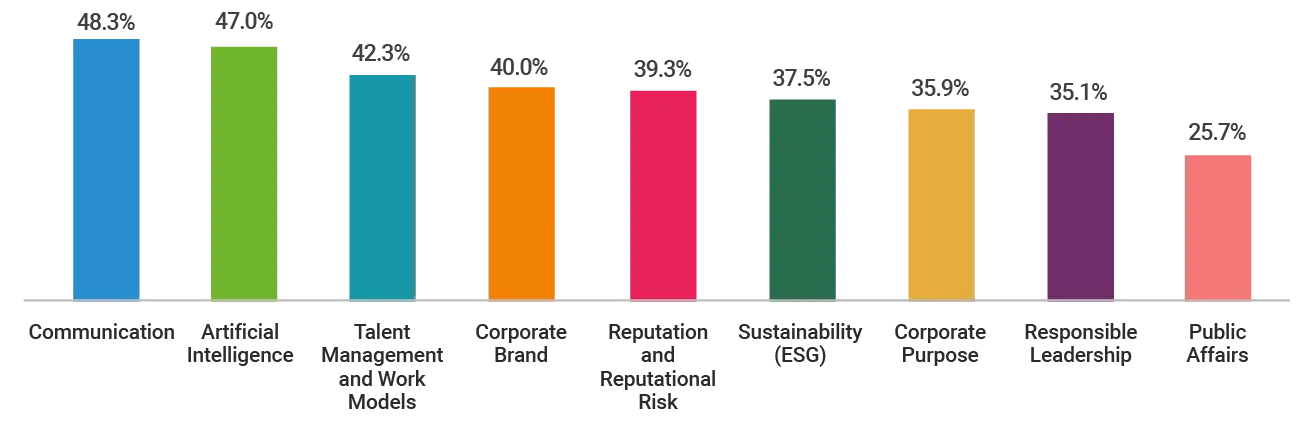
2026 RANKING BY RESOURCES AND EFFORT ALLOCATED
2026 Ranking by Resources and Effort Allocated - Ibero-America
Source: Approaching the Future 2026
2. TREND MAP
KEY FINDINGS FOR 2026
Al leads in importance and ranks among the areas receiving the most resources and effort
Al is, at the same time, the most important trend and one of the areas receiving the most resources and effort, which indicates that it is in a phase of active integration in organisations.
Communication assumes operational centrality
It continues to be the area with the greatest dedication of resources and efforts, reinforcing its role as a crosscutting capability to activate the rest of the intangibles, generate trust and connect strategy with stakeholders.
2. TREND MAP
Talent is confirmed as a condition for transformation
Its progress confirms that technology cannot be understood separately from human capabilities, culture, learning and new work models.
Public affairs enters the trend map
Its incorporation reflects the growing relevance of the relationship between business, regulation, institutions and public policy, although it still shows a relatively low level of operational activation.
Sustainability’s position on the business agenda is shifting
Its lower relative weight in stated importance should not be interpreted as abandonment, but as the reflection of a change of cycle marked by greater regulatory pressure, political debate and the need to demonstrate real impact on the business.
3. Executive insights by trend: lessons for navigating 2026
3
Executive insights by trend: Lessons for navigating


Beyond the ranking of importance and the areas that receive the most resources in 2026, each trend offers a specific overview for decision- making . Artificial intelligence , talent management and work models , communication , reputation , responsible leadership , purpose , sustainability , public affairs and corporate brand do not evolve as isolated areas, but as interdependent capabilities that shape the competitiveness, trust and value creation of organisations.
3. Executive insights by trend: lessons for navigating 2026
1
Artificial intelligence: relevance, reputation and trust in the age of the algorithm
Al defines the new competitive playing field, but its impact goes beyond efficiency or automation; it is a central driver of business transformation. In addition, it redefines how organisations are found, interpreted and recommended in environments mediated by algorithms, conversational assistants and generative search systems. The management of reputation and corporate visibility will have to adapt to this new intermediation.
2
Talent and ways of working: technological transformation requires human capabilities
The advance of Al once again places talent at the strategic centre of the agenda. Competitive advantage will not depend solely on incorporating technology, but also on the human factor: developing capabilities, learning, culture and work models which are capable of turning that technology into value.
3
Communication: from narrative to business impact
Communication maintains its role as one of the areas to which the most resources are allocated. Its relevance lies in connecting the organisation’s agenda with its stakeholders. Its evolution involves better integrating internal communication, listening and measurement, demonstrating its impact more clearly on reputation, engagement, social licence, differentiation and business results.
4
Reputation and reputational risk: robust metrics for better
La reputación sigue siendo un activo central de confianza y legitimidad. El avance en medición — con cerca de 8 de cada 10 organizaciones midiendo su reputación— marca una evolución relevante. El reto será utilizar esa información para anticipar riesgos, orientar decisiones y demostrar su contribución al negocio.
5
Responsible leadership: from conviction to management practice
Responsible leadership continues to rank highly in importance, but still shows a significant gap between recognition and management.
3. Executive insights by trend: lessons for navigating 2026
6
Corporate purpose: from definition to measurement
Organisations face growing demands to put purpose into practice. It is no longer enough to define or communicate it: it must guide decisions, bring organisational culture to life and demonstrate its contribution. Measuring its integration will be key to preventing it from being limited to storytelling.
7
Sustainability; making commitments and demonstrating results
Sustainability does not disappear from the agenda; it is being reframed. In a context of greater regulatory pressure, polarisation and scrutiny, its credibility will depend on the ability to connect commitments with results, impact and value creation.
8
Public affairs: a function gaining importance in increasingly complex environments
The entry of public affairs on the map reflects greater exposure of companies to the regulatory, institutional and geopolitical environment. Its evolution will require progress in anticipation, legitimate influence, listening and impact measurement.
9
Corporate brand: differentiation and relevance amid information overload
Organisations continue to devote substantial effort to corporate brand management, even if it does not always appear among the highest priorities. Its role will be key to building differentiation, coherence and consistent experiences in an environment of information overload and algorithmic mediation.

4. The business agenda in Spain and Latin America
4
The business agenda in Spain and Latin America
4. The business agenda in Spain and Latin America
The results of Approaching the Future 2026 show a shared but not homogeneous Ibero-American agenda. Spain and Latin America share a strong focus on artificial intelligence, communication, reputation and talent, although each region ranks these priorities based on different business realities and management contexts.
In Spain, artificial intelligence leads for the first time both the ranking of importance and that of allocated resources, confirming its entry into a more active phase of strategic integration. Talent management and work models show the greatest rise in the ranking, while reputation, communication and sustainability maintain a relevant role, although with different results in terms of activation and resources.
In Latin America, reputation and reputational risk is the most important area and, once again, maintains a solid position as an asset of trust and legitimacy. Artificial intelligence is rapidly gaining prominence and talent is emerging as a growing priority.
4. The business agenda in Spain and Latin America
SPAIN: AI AND TALENT AS DRIVERS OF TRANSFORMATION
Changes in importance - Spain
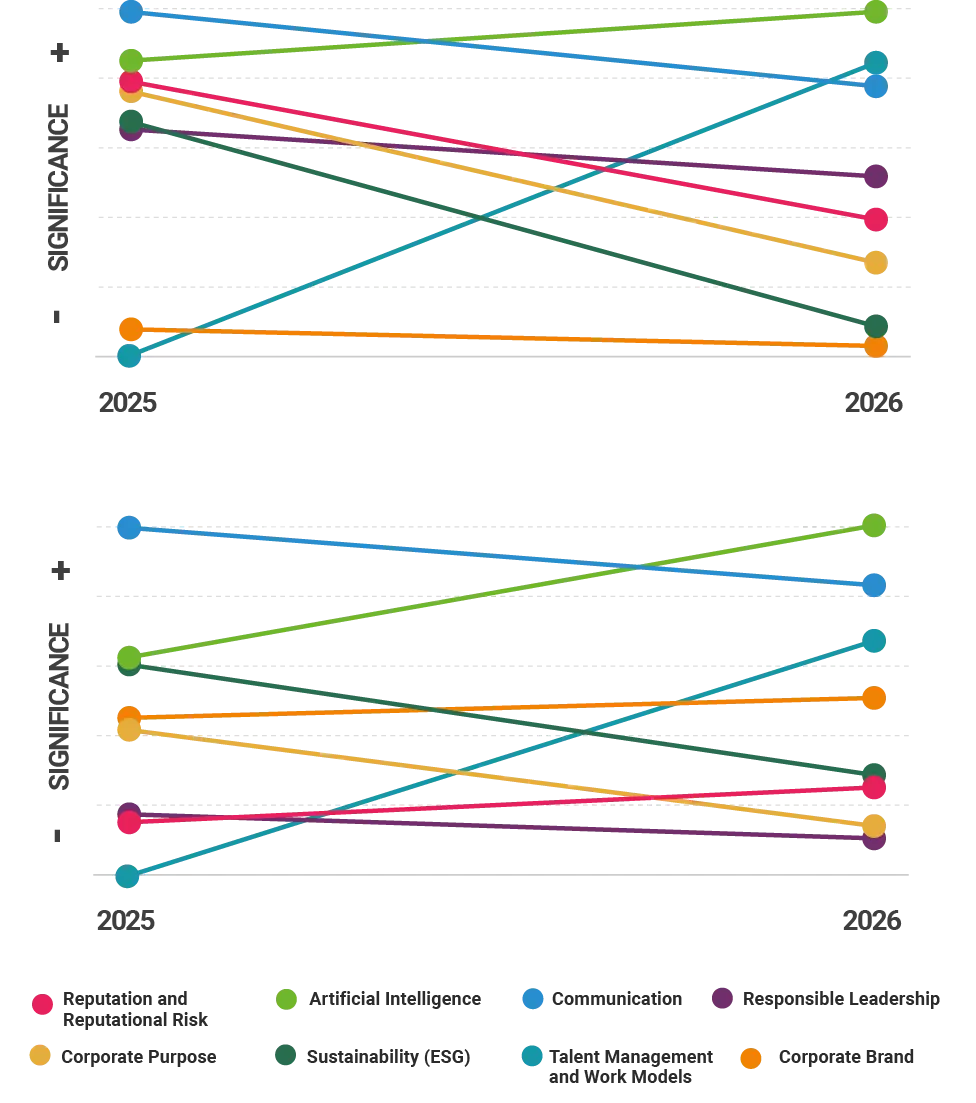
Changes in resources and effort allocated - Spain
Source: Approaching the Future 2026
4. The business agenda in Spain and Latin America
Latin america: REPUTATION, Al
AND TALENT MANAGEMENT AS
STRATEGIC PRIORITIES
Changes in importance - Latin America
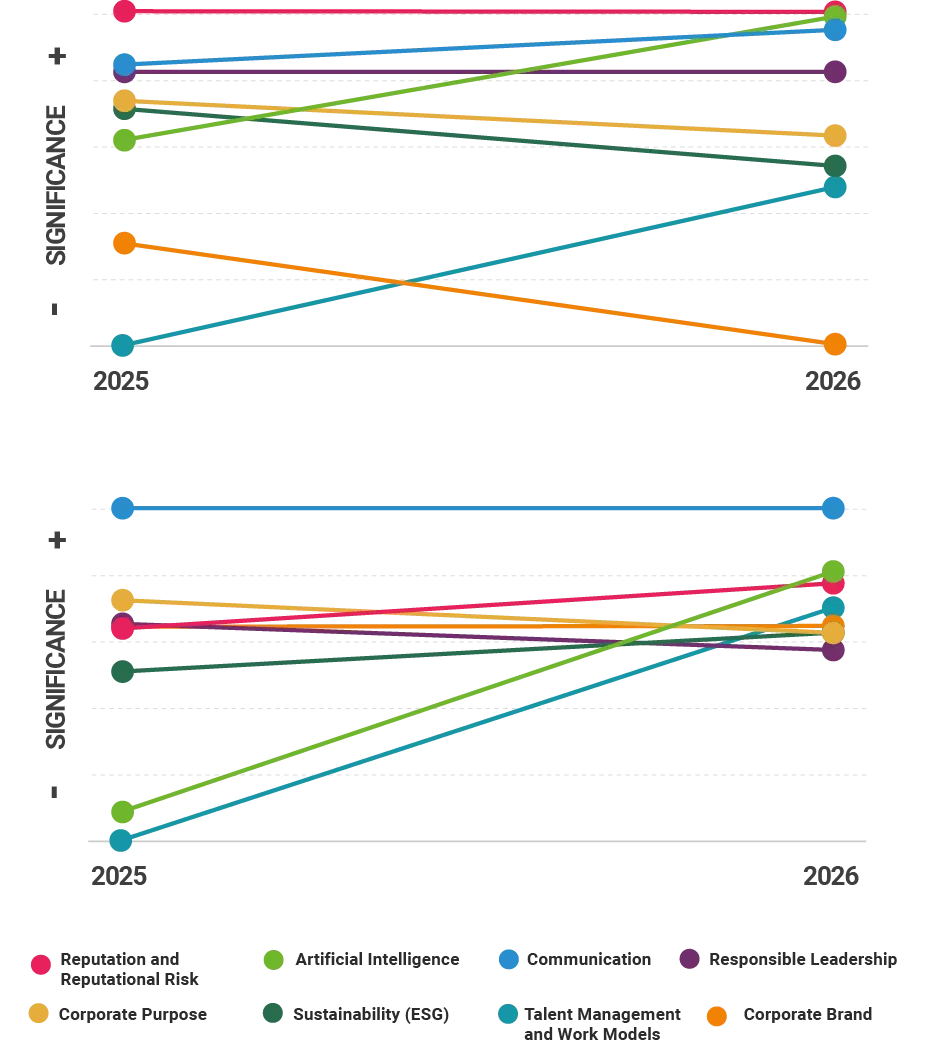
Changes in resources and effort allocated - Latin America
Source: Approaching the Future 2026
4. The business agenda in Spain and Latin America

COMPARATIVE OVERVIEW
The difference between Spain and Latin America lies not so much in the trends they consider relevant, but in the place they occupy on the agenda . In Spain, Al and talent set the pace of transformation more strongly. In Latin America, reputation continues to operate as a cornerstone of trust, while Al and talent advance as emerging priorities.
In both cases, the common challenge will be to move from priority to capability : integrating intangibles into strategy, providing them with resources, measuring their contribution and connecting them with decision-making. That is where the evolution of the business agenda in 2026 will be decided.
5. The next frontier: metrics, dashboards and the evolving management function
5
The next frontier: metrics, dashboards and the evolving management function
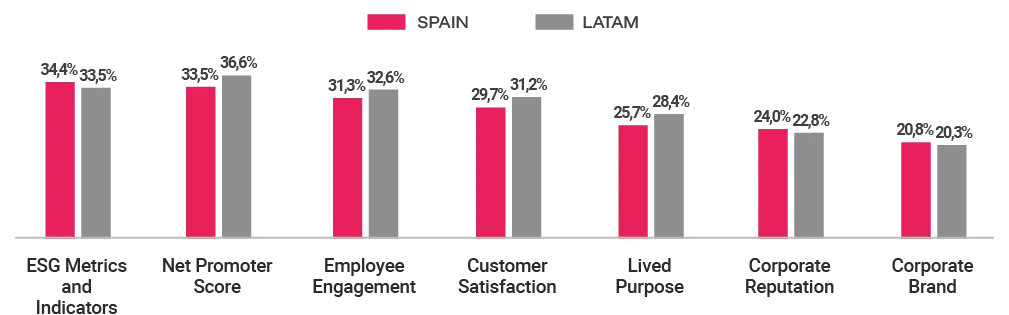
Approaching the Future 2026 includes, for the first time, a specific snapshot of the incorporation of intangible assets and resources into organisations’ measurement and management systems. The results show a landscape in transition: organisations are making progress in measurement, but are still far from fully integrating intangibles into their decision-making and incentive systems. The main challenge is not only to measure, but to turn those metrics into criteria that influence decision-making, accountability and the remuneration of executive teams and all employees.
5. The next frontier: metrics, dashboards and the evolving management function
Which areas manage intangibles?
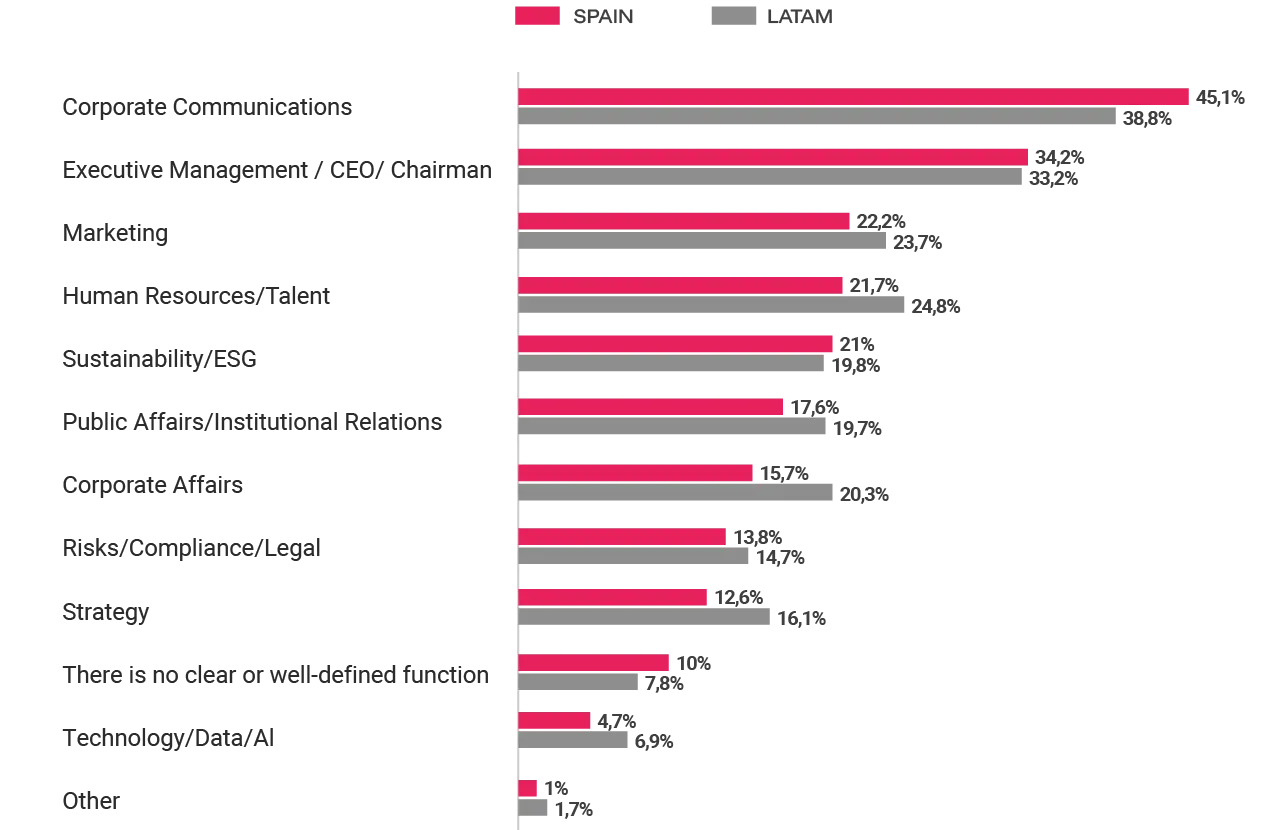
Source: Approaching the Future 2026
5. The next frontier: metrics, dashboards and the evolving management function
Metrics included in the 2026 dashboards
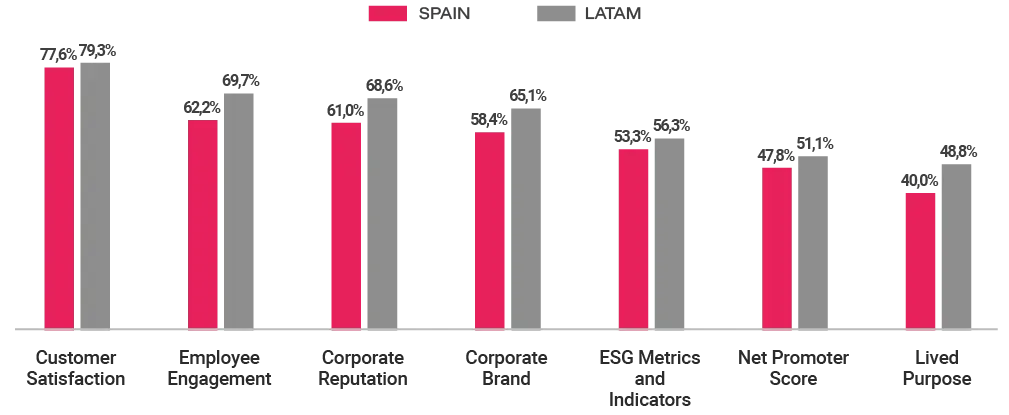
Indicators linked to compensation
Source: Approaching the Future 2026
6. Key conclusions
6
Key Conclusions


Key takeaways
Approaching the Future 2026 shows a business agenda undergoing significant change. Artificial intelligence sets the new competitive context , but its impact will depend on the ability of organisations to develop and mobilise talent, adapt work models, communicate consistently, manage their reputation and build trust in increasingly complex environments.
6. Key conclusions

The data confirm that intangibles remain essential for creating and protecting business value, but they also show that maturity in their management is uneven . Some trends, such as communication, Al or talent, show greater alignment between priority and resources allocated. Others, such as responsible leadership, reputation, purpose or public affairs, continue to show significant gaps between what organisations recognise as important and what they actually integrate into their management systems.
The main conclusion of this edition is clear: the future of intangibles will depend on organisations’ ability to turn them into decisions, capabilities, metrics, responsibilities and behaviours .
Future success will depend on integrating Al with ethics, talent, reputation and trust; measuring intangibles using robust methods; and ensuring that commitments and actions translate into value for stakeholders. The company of the future will embrace change strategically, respond to its evolving environment and create lasting value for the communities in which it operates .
About Approaching the Future
Approaching the Future: international benchmark report on reputation and intangible management
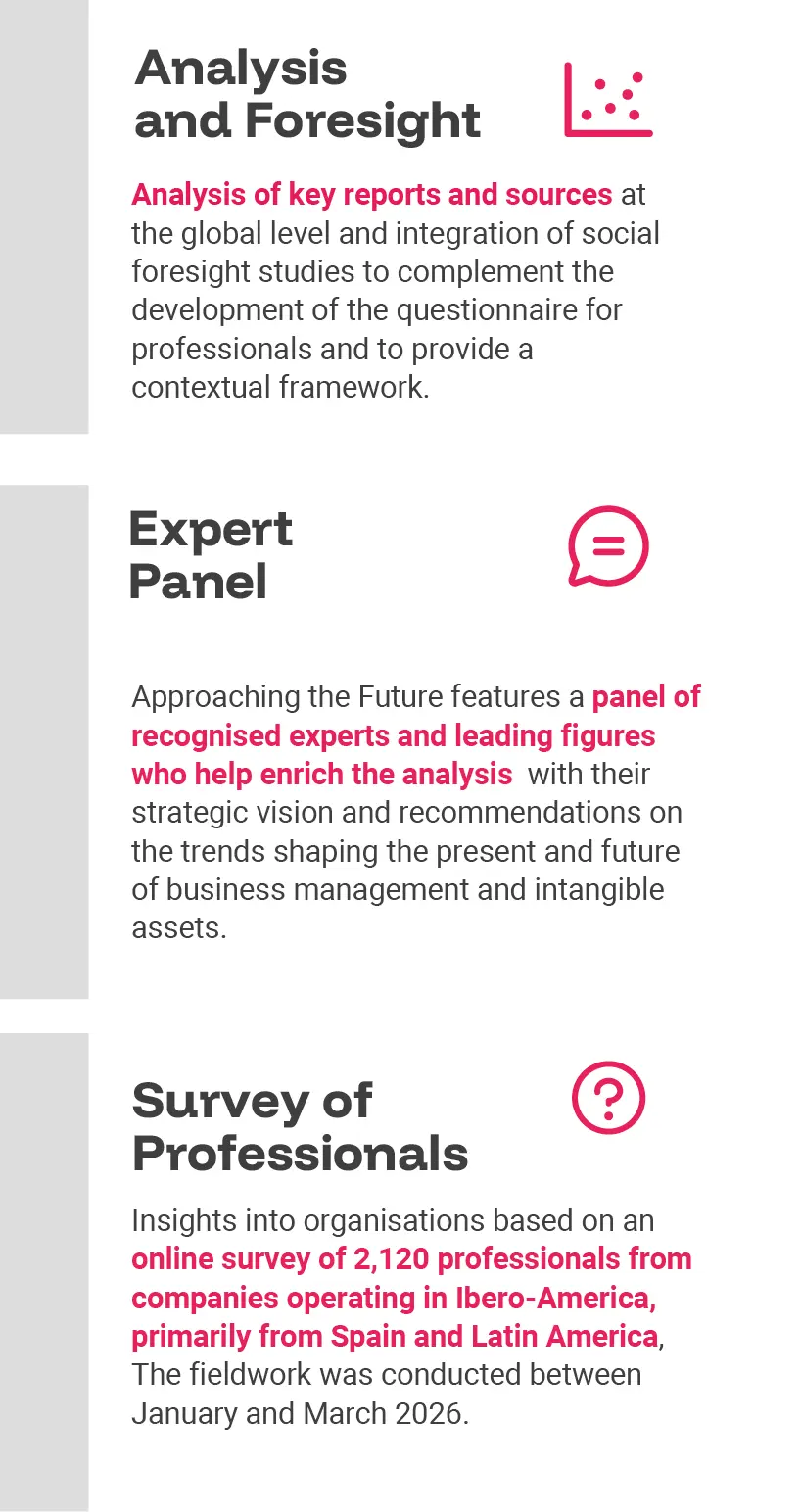
This edition incorporates two methodological innovations that reinforce the practical and actionable dimension of the report.
An analysis of the factors shaping business management and the management of intangibles in Spain and Latin America.
A dedicated analysis of metrics and integrated management of intangibles.
1
2

About Approaching the Future
About Approaching the Future

Expert panel


Ángel Pascual Ramsay
Alberto Andreu
Associate professor at the University of Navarra and Senior advisor at EY
Professor of geopolitics and geoeconomics & Senior
Fellow at the Centre for Global Economics
and Geopolitics. ESADE
Business School


Gabriela González- Valdés
Esther Paniagua
Journalist and technology analyst
Director General of the Institute of Internal Auditors of Spain


Lucía Carballeda
Juan de los Ángeles
Co-General Manager & Head of Reputation at
Edelman Spain
Expert in trend identification, innovation and change & Associate consultant at Zink
Innovation & Trends


Luis Megías
Macarena Estévez
Head of BlackRock for Spain, Portugal and Andorra
CEO of Cirentis


Oriol Iglesias
Ramón Pueyo
ESADE Professor - Ramon Lull
University & Academic co- director of the programme The Global CCO
Head of Sustainability and Corporate Governance
KPMG Spain
About Approaching the Future
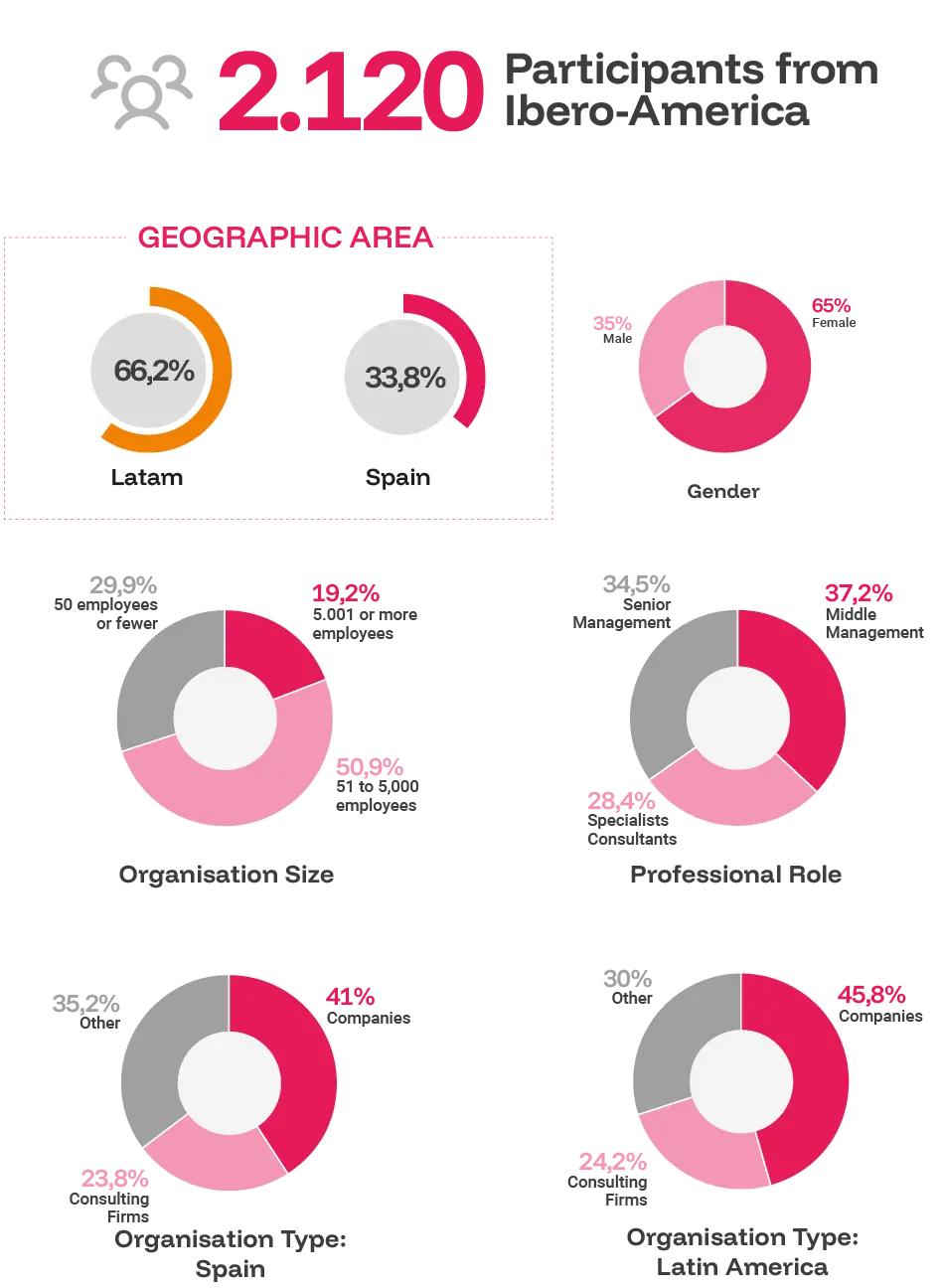
2026 professional survey: Methodology and sample profile
About Corporate Excellence - Centre for Reputation Leadership
The Corporate Excellence in Communication and Reputation Foundation, publicly known as Corporate Excellence - Centre for Reputation Leadership, is a non-profit corporate foundation that serves the public interest. It was created in 2011 by large companies to professionalise excellence in the integrated and comprehensive management of intangibles as strategic resources that guide and enable companies to create and protect the value they generate in the long term and to distribute it more evenly among their main stakeholders. It is an action tank that generates knowledge and applied innovation. Approaching the Future. Trends in Reputation and Intangible Management is its flagship annual report, now in its eleventh edition.
www.corporateexcellence.org
Access all materials at

Please help us share Approaching the Future 2026 and credit the organisations behind the report.
Corporate Excellence - Centre for Reputation Leadership y Canvas Estrategias Sostenibles (2026). Approaching the Future 2026.
© 2026, Corporate Excellence – Centre for Reputation Leadership & CANVAS Estrategias Sostenibles All rights reserved